For B2B GPS tracking and telematics providers, business growth often brings a new challenge: managing more customers without increasing operational costs. Acquiring new clients is important, but when every new customer requires additional support, manual coordination, and operational effort, scaling becomes difficult.
This is particularly relevant for providers serving schools, fleet businesses, and school transport operators. As customer expectations grow, businesses need solutions that go beyond vehicle tracking and help them manage transportation operations more efficiently.
With the right School Transport Software, B2B providers can expand their services, automate repetitive tasks, improve customer value, and support more customers without continuously increasing their workforce.
For providers targeting Ghana, Nigeria, Tanzania, Kenya, and Indonesia, technology-driven service delivery can create opportunities for sustainable business growth.
1. Why Scaling a GPS Business Often Requires More Resources
Many GPS tracking providers initially manage their operations with a small team. Sales representatives handle customers, technical teams manage device installations, and support teams respond to tracking-related queries.
However, as the customer base expands, the workload can increase significantly.
Providers may start dealing with:
- More customer support requests.
- Frequent questions about vehicle locations.
- Manual report preparation.
- Customer requests for route updates.
- Additional account management activities.
- Time-consuming operational coordination.
When these processes are handled manually, businesses may need to hire more employees simply to maintain their existing service quality.
This can affect profitability and make it difficult to scale efficiently.
The solution is not necessarily to hire more people. In many cases, providers need better software, automation, and centralized management tools that reduce repetitive work.
2. Expand Beyond GPS Tracking with Complete School Transport Software
Traditional GPS tracking primarily focuses on vehicle locations, movement, and trip history.
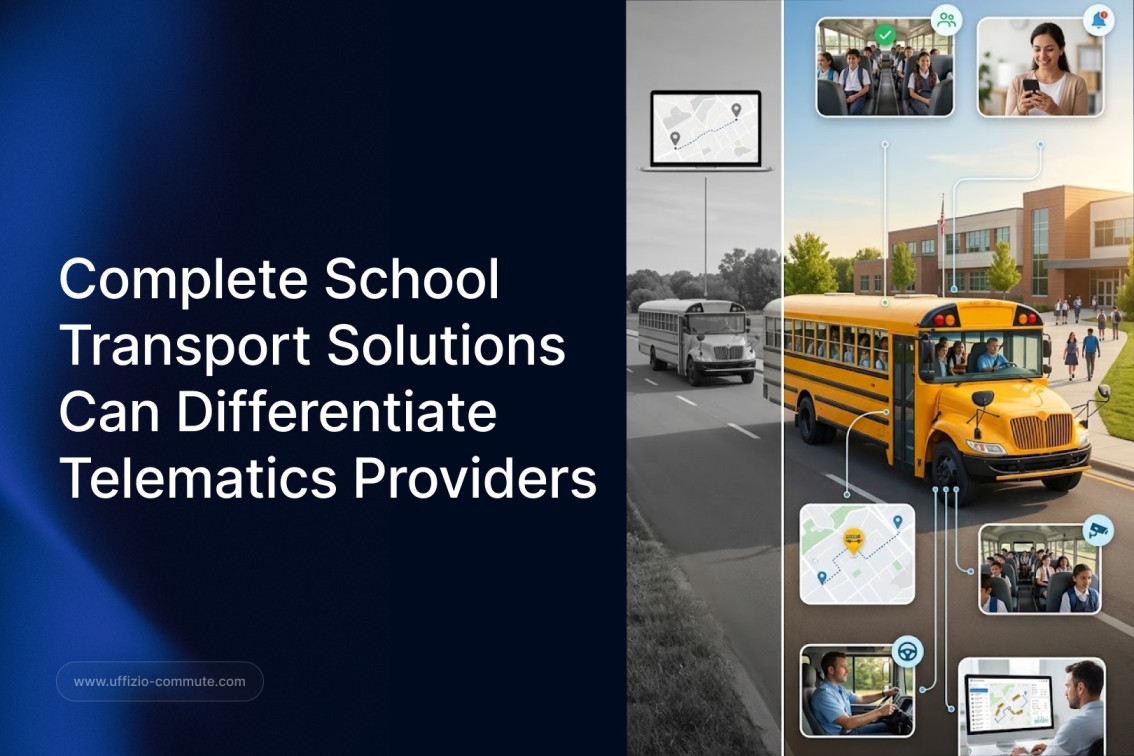
However, schools and transport operators require more comprehensive transportation management capabilities. They need to manage students, drivers, vehicles, routes, trips, attendance, and communication.
Offering School Transport Software allows B2B providers to expand their existing GPS offering with additional capabilities.
A complete platform can help customers manage:
- Student and vehicle information.
- Daily trips and routes.
- Driver activities.
- Student attendance.
- Parent notifications.
- Transportation reports.
- Operational dashboards.
For GPS providers, offering these features can help them serve customers more effectively without manually managing every transportation activity.
Instead of providing separate services for different operational requirements, businesses can offer a connected platform that helps customers manage their transportation activities from one place.
3. Automate Repetitive Tasks to Reduce Support Workload
One of the biggest barriers to scaling is the amount of repetitive work that teams handle every day.
For example, support teams may regularly receive questions about bus locations, arrival times, trip status, or student boarding.
When these questions are handled manually, employees spend valuable time responding to requests that could be addressed through automated notifications and self-service access.
Live School Bus Tracking can help reduce this workload by giving parents and authorized users access to real-time bus information.
With the right platform, customers can access:
- Real-time bus location updates.
- Estimated arrival times.
- Trip status information.
- Bus arrival notifications.
- Student boarding and drop-off alerts.
When parents can access relevant information directly through an application, schools may experience fewer repetitive calls and messages related to bus movement.
This can help GPS providers reduce the support burden associated with routine tracking inquiries.
4. Manage More Customers Through Centralized Operations
Managing multiple customers becomes increasingly complex when information is scattered across spreadsheets, applications, reports, and communication channels.
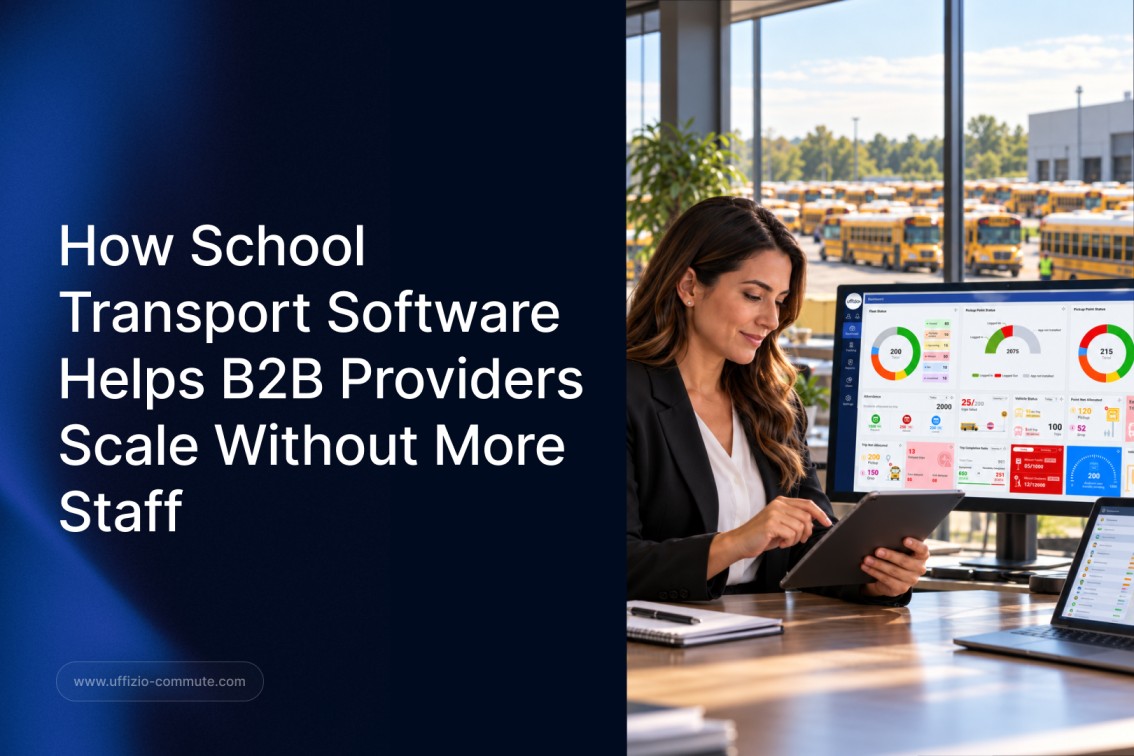
A centralized School Transport Software platform can simplify this process by organizing important transportation information in one system.
For B2B providers, centralized management can help customers monitor their transportation activities while giving administrators access to relevant operational information.
Depending on the platform’s capabilities, customers may be able to manage:
- Multiple vehicles.
- Multiple routes.
- Different drivers.
- Student records.
- Trip schedules.
- Attendance information.
- Operational reports.
This centralized approach reduces the need for customers to depend on manual coordination for every activity.
For providers, offering a platform with organized workflows can make customer onboarding, product demonstrations, and ongoing service delivery more manageable as the business grows.
5. Improve Customer Experience Without Expanding Your Team
Customer experience plays an important role in retaining GPS and telematics customers.
When customers receive reliable services, access useful information, and manage their operations efficiently, they have more reasons to continue using the provider’s solution.
However, maintaining a positive customer experience becomes challenging when the customer base grows faster than the support team.
Technology can help bridge this gap.
A complete GPS Tracking Software solution combined with transportation management capabilities can allow customers to access information independently, automate daily activities, and reduce their dependence on support teams.
For example, customers can use dashboards to review trip information, access reports, monitor buses, and manage transportation activities.
When the platform handles more routine tasks, employees can focus on complex customer requests, business development, partnerships, and strategic activities.
This allows providers to improve service delivery without necessarily hiring additional employees for every new customer.
6. Create New Revenue Opportunities with Existing Customers
Scaling without increasing staff is not only about reducing operational workload. It is also about increasing the value of existing customer relationships.
Many GPS providers already serve schools, fleet operators, and transportation businesses.
Instead of constantly searching for new customers, providers can explore opportunities to introduce additional software capabilities to their existing customer base.
For example, a GPS tracking customer may also require:
- Parent mobile applications.
- Student attendance management.
- Route management.
- Driver monitoring.
- Trip notifications.
- Transportation reports.
By offering these additional capabilities through School Transport Software, providers can expand their product portfolio and potentially generate additional recurring revenue.
This approach can help businesses grow revenue from existing relationships while reducing the pressure to acquire new customers continuously.
7. Explore Growing School Transport Markets in Africa and Indonesia
Ghana, Nigeria, Tanzania, Kenya, and Indonesia offer opportunities for GPS tracking providers looking to expand their technology services into school transportation.
However, businesses should approach these markets with an understanding of local customer requirements, infrastructure, and operating challenges.
In Ghana and Nigeria, providers can explore opportunities with private schools, transport operators, and fleet management companies looking to improve vehicle visibility and daily operations.
In Kenya and Tanzania, GPS businesses can approach schools and transport providers interested in improving communication, student monitoring, and transportation coordination.
In Indonesia, telematics providers can explore partnerships with school groups, transport service providers, and technology businesses seeking digital transportation solutions.
For providers operating across these markets, offering flexible and scalable School Transport Software can help address a wider range of customer requirements.
A scalable platform can also support business expansion as providers acquire more customers, vehicles, and operational deployments.
8. Scale Smarter with the Right Technology Partner
Developing and maintaining a complete school transport platform internally can require significant time, investment, and technical resources.
For GPS providers, this may create additional pressure on development and support teams.
Partnering with an established software provider or adopting a white-label platform can offer an alternative approach.
With the right technology partner, businesses can expand their offering while focusing on customer acquisition, sales, marketing, and business growth.
Before selecting a solution, providers should evaluate:
- Available transportation management features.
- Integration with GPS tracking devices.
- Mobile application capabilities.
- Branding and customization options.
- Scalability for growing customer bases.
- Technical support and product updates.
Choosing a scalable platform can help providers expand their services without building and maintaining every feature themselves.

Conclusão
Growing a GPS tracking business does not always mean growing the workforce at the same rate.
By introducing automation, centralized operations, and complete School Transport Software, B2B providers can reduce repetitive tasks, improve customer experience, and manage a growing customer base more efficiently.
Combining GPS Tracking Software, Live School Bus Tracking, and complete transportation management capabilities creates opportunities to deliver more value to schools and transport operators.