GPS tracking has changed the way school transportation is managed. It gives schools visibility into vehicle locations, helps transport teams monitor routes, and provides parents with more confidence about where the school bus is.
But there is an important shift happening in the market.
School transport clients are realizing that knowing where a bus is isn’t the same as managing school transportation effectively.
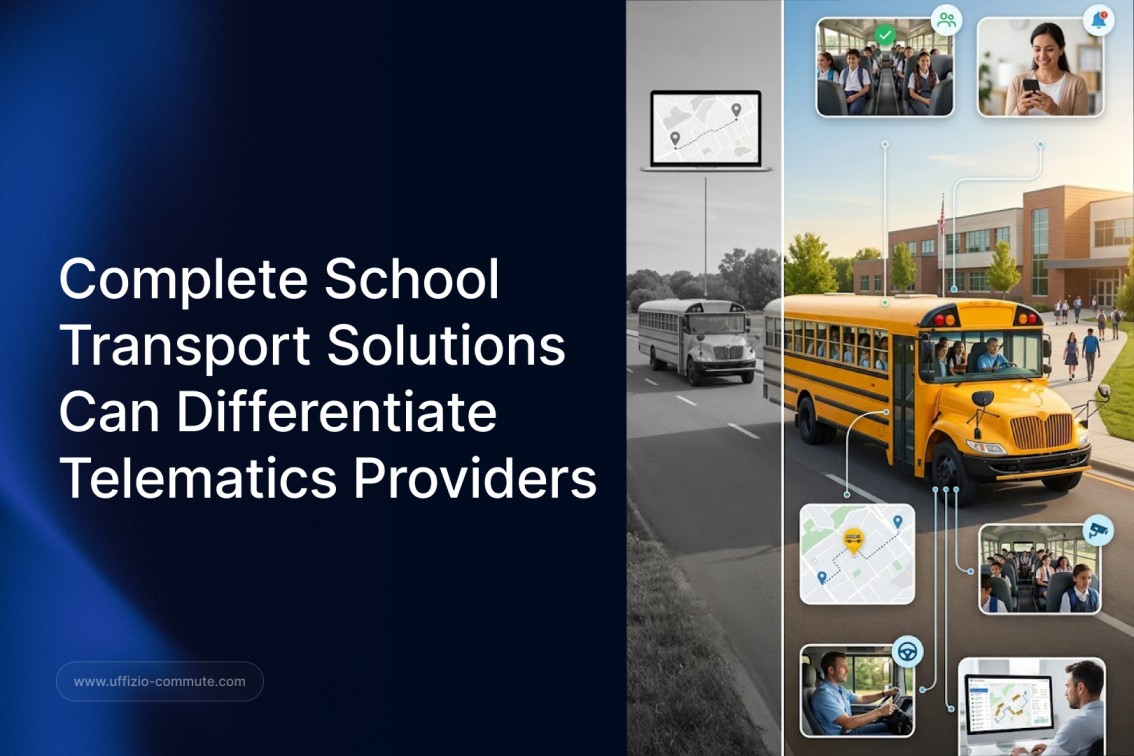
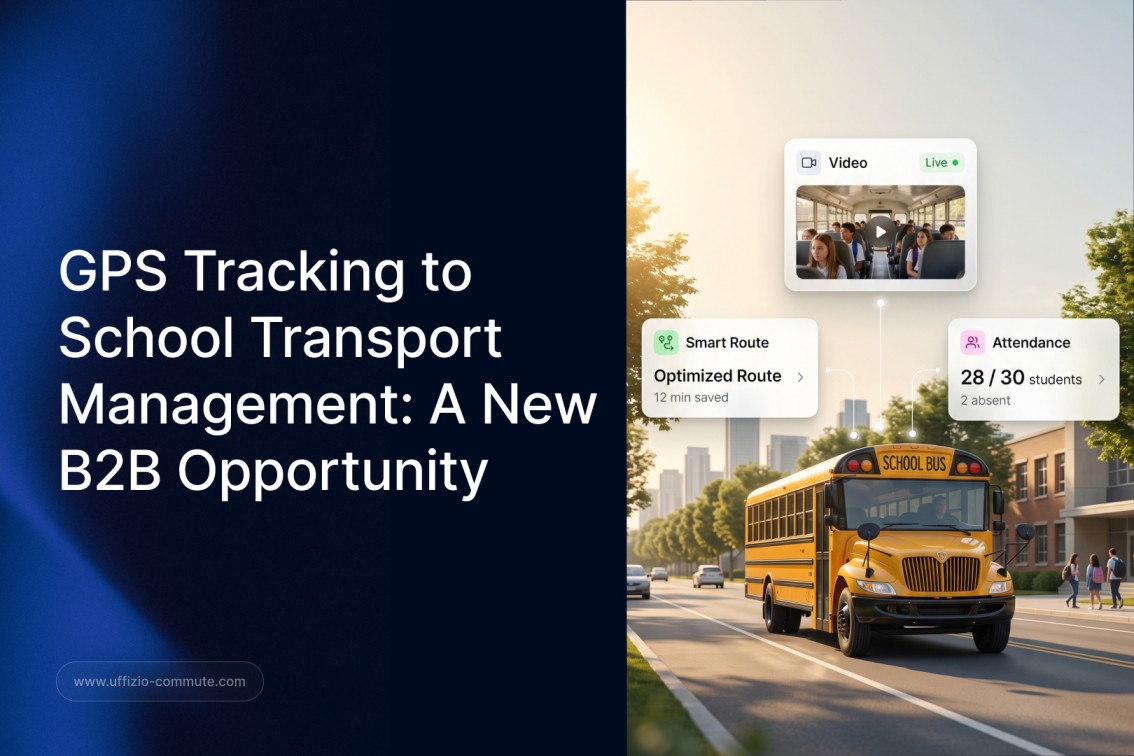
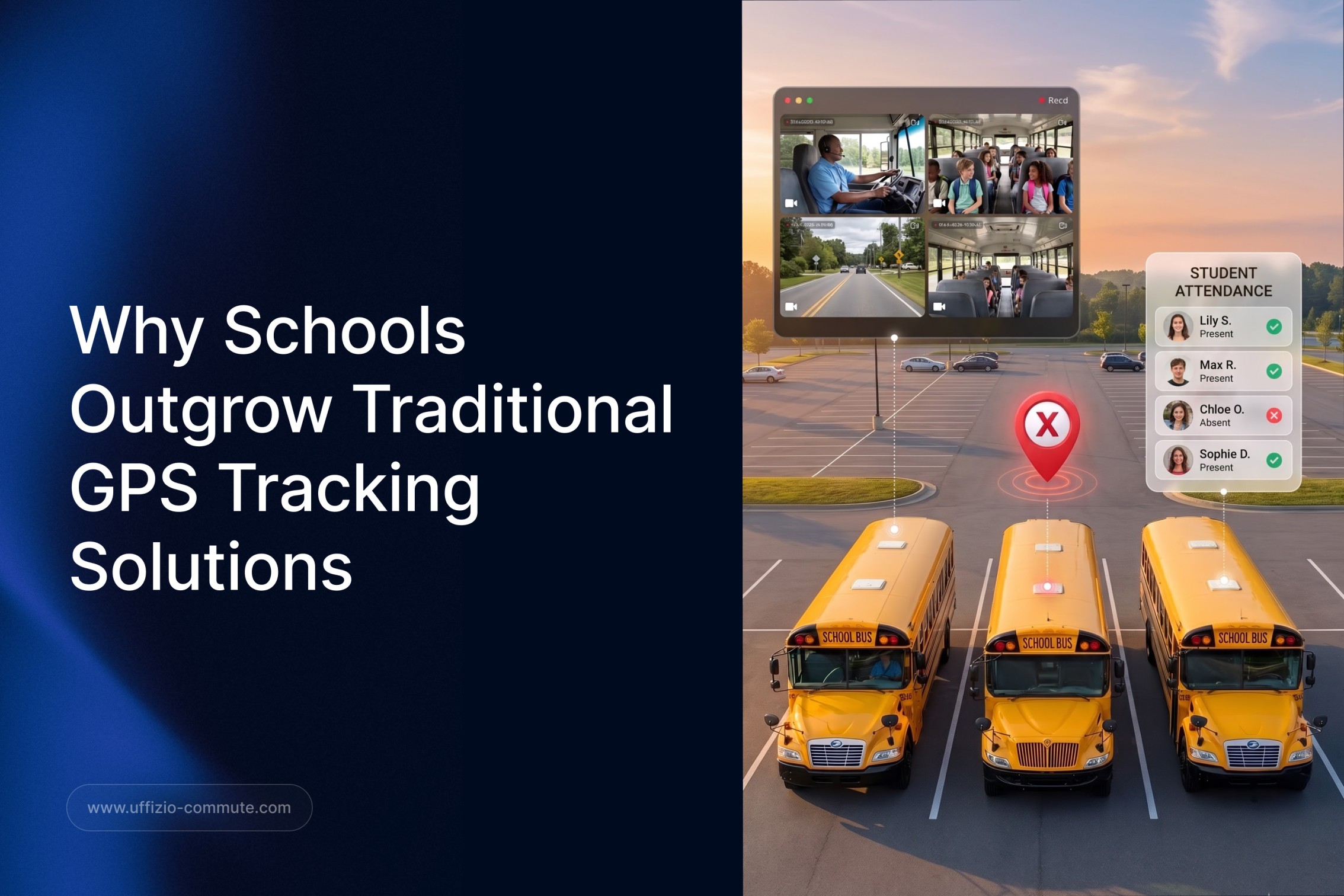
A GPS tracker can show the location of a vehicle, but modern school transport operations involve much more than location. Schools need student attendance, parent communication, driver management, route planning, alerts, reporting, safety monitoring, and operational insights.
This is why many schools and school transport operators across APAC, ANZ, GCC, Africa, Latin America, and India are moving beyond GPS-only solutions toward complete School Transport Software.
GPS Tracking Solves One Problem, Not the Whole Operation
Traditional GPS Tracking Software is primarily designed to answer one question:
Where is my vehicle?
That information is valuable, but it represents only one part of the transportation workflow.
A school transport manager may also need to know:
- Which students are onboard?
- Has a particular student boarded?
- Has the student been dropped off?
- Is the driver following the assigned route?
- Why is a bus delayed?
- Which routes regularly experience delays?
- How efficiently is the fleet being used?
- Have parents received the required notifications?
- What happened during a previous trip?
GPS alone cannot answer all of these questions.
This gap between vehicle tracking and complete transport management is one of the biggest reasons clients eventually outgrow GPS-only platforms.
1. Parents Expect More Than a Moving Bus on a Map
Parents are one of the most important stakeholders in school transportation.
They don’t simply want to know where a bus is. They want reassurance that their child is travelling safely.
For example, parents may want notifications when:
- The bus starts its trip
- The bus is approaching the pickup location
- Their child boards the bus
- The bus reaches school
- Their child is dropped off
- A trip is delayed
- An emergency occurs
Live School Bus Tracking provides valuable visibility, but the best experience combines live tracking with automated notifications and student-specific information.
When parents have to call the school to ask where the bus is, the technology isn’t reducing workload; it may simply be moving the problem somewhere else.
2. School Transport Is About Students, Not Just Vehicles
This is perhaps the biggest limitation of a GPS-only approach.
A GPS tracker knows where the bus is.
It doesn’t automatically know which students are onboard.
School transportation requires a connection between vehicles, drivers, routes, and students.
Modern Software für den Schülertransport can bring these elements together.
For example, when a student boards the bus, the system can record the event. When the student reaches the destination, the drop-off can also be recorded.
This creates a much more complete view of the student’s journey.
3. GPS-Only Solutions Often Create More Manual Work
Ironically, some GPS platforms can introduce additional work.
A transport manager may have a tracking dashboard open, but still need separate tools for:
- Attendance
- Student records
- Parent communication
- Driver information
- Route planning
- Berichte
- Emergency communication
This creates fragmented workflows.
The team ends up switching between different applications and manually transferring information.
A complete School Transport Software platform brings these workflows together.
The goal isn’t simply to add more technology.
The goal is to reduce the number of manual steps required to manage transportation.
4. Live Tracking Is Valuable, But Historical Data Is More Powerful
Live School Bus Tracking helps transport teams understand what is happening right now.
But historical data helps them understand what happened over time.
Consider a school that notices one route is frequently late.
Live tracking can show the delay.
Historical data can reveal that the route has been delayed repeatedly over several weeks.
That insight allows the transport manager to investigate the underlying cause.
Perhaps:
- The route needs to be redesigned.
- The pickup schedule needs adjustment.
- Traffic conditions consistently affect a specific section.
- The bus is being underutilized or overloaded.
- A particular operational process needs improvement.
This is where School Transport Software becomes more valuable than simple location tracking.
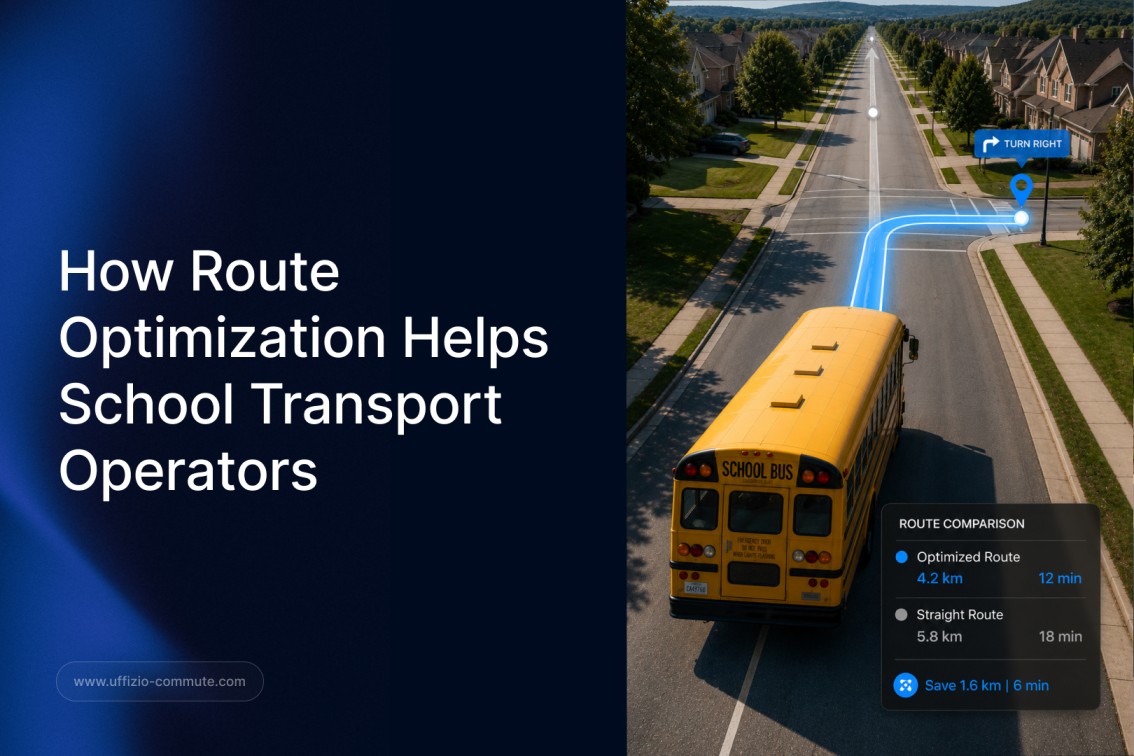
5. Route Management Is More Complex Than Tracking
Knowing that a bus has moved away from its route is useful.
But managing routes requires more than detecting deviations.
Schools regularly deal with:
- New students
- Students leaving transport services
- Address changes
- New pickup points
- Different school schedules
- Multiple campuses
- Temporary road closures
- Traffic-related changes
As these variables increase, route management becomes a continuous process.
A modern platform can help transport teams manage routes more systematically rather than relying on spreadsheets and manual communication.
6. Driver Management Matters Too
The driver is an essential part of school bus safety.
A GPS-only platform may tell administrators where the vehicle is, but school transport teams also need visibility into driving behavior and trip performance.
Depending on the available telematics data, GPS Tracking Software can support monitoring of factors such as:
- Speed
- Harsh braking
- Sudden acceleration
- Routenabweichungen
- Excessive idling
- Trip duration
This information can help schools identify patterns and provide targeted driver training.
The objective isn’t simply to monitor drivers.
It’s to use data to continuously improve transportation safety.
7. Emergency Management Requires More Than Location
Imagine a school bus experiences a breakdown during the morning trip.
Knowing its GPS location is helpful.
But the transport team may also need to know:
- Which students are onboard?
- Who is driving?
- Which route was being followed?
- How long has the bus been stationary?
- Who needs to be notified?
- What alternative vehicle is available?
This is where an integrated School Transport Software platform can provide greater operational context.
When vehicle, route, driver, student, and communication data are connected, the transport team can respond more quickly.
Why Clients Eventually Outgrow GPS-Only Solutions
GPS-only solutions can be a good starting point.
For a small fleet with limited requirements, basic tracking may provide sufficient value.
But as the operation grows, expectations change.
A school might begin with:
“We just need to track our buses.”
A year later, the requirement becomes:
“We need tracking, attendance, parent communication, route management, driver monitoring, alerts, reports, and better operational visibility.”
This is the natural progression of a growing transport operation.
The problem isn’t necessarily that GPS doesn’t work.
The problem is that GPS alone isn’t designed to solve every school transport challenge.
What School Transport Clients Expect Today
Modern school transport clients increasingly look for a complete ecosystem rather than an individual tracking feature.
A strong School Transport Software platform should ideally support:
Vehicle Management
Centralized information about buses, devices, and vehicle activity.
Live School Bus Tracking
Real-time visibility into bus locations, routes, and trip progress.
Studentenverwaltung
Student profiles, assigned vehicles, routes, and transportation details.
Anwesenheitsmanagement
Digital boarding and drop-off records.
Parent Communication
Automated notifications and real-time trip information.
Driver Management
Driver details, assignments, and relevant trip or behavior data.
Routenmanagement
Tools for creating, assigning, monitoring, and improving routes.
Warnungen und Benachrichtigungen
Timely updates for delays, emergencies, route changes, and trip events.
Berichte und Analysen
Historical data that helps transport managers identify trends and improve performance.
When these capabilities work together, transportation becomes much easier to manage.
The Regional Shift Across APAC, ANZ, GCC, Africa, Latin America, and India
The need for integrated transportation technology is growing across different markets.
APAC
Large student populations and increasingly complex urban transportation make centralized management valuable. Schools need more than basic GPS Tracking Software to manage growing fleets efficiently.
ANZ
Safety, accountability, and transparency remain important priorities. Integrated transport platforms can help schools maintain better operational records and visibility.
GCC
Parents increasingly expect a premium transportation experience. Live School Bus Tracking, automated alerts, and digital communication can help schools deliver greater transparency.
Africa
As educational institutions expand their transportation networks, scalable School Transport Software can help them manage larger fleets without relying entirely on manual processes.
Latin America
Traffic congestion and complex routes make real-time visibility particularly useful. Combining tracking with route and operational data can help transport teams respond more effectively.
India
Large school networks and growing parent expectations are driving demand for more connected transport solutions. Schools are increasingly looking beyond basic GPS tracking toward complete transportation management.
GPS Is Still Important, But It Should Be the Foundation
Moving away from GPS-only solutions doesn’t mean GPS is becoming irrelevant.
Quite the opposite.
GPS Tracking Software remains the foundation of modern school transportation.
The difference is what happens with the data after it is collected.
GPS provides location.
School Transport Software turns that location data into operational visibility.
When GPS is connected with student information, attendance, routes, alerts, communication, and analytics, schools can build a much more complete transportation ecosystem.

Abschluss
School transport clients don’t necessarily leave GPS-only solutions because GPS tracking has stopped being useful.
They leave because their transportation requirements have evolved.
As fleets grow and parent expectations increase, schools need more than vehicle location. They need a connected system that helps them manage students, drivers, routes, attendance, communication, safety, and performance.
Live School Bus Tracking remains an essential capability, but it becomes far more powerful when combined with comprehensive School Transport Software.
For schools and transport operators across APAC, ANZ, GCC, Africa, Latin America, and India, the future isn’t GPS versus software.